
The impact of AI on computer science admissions: A turning point for tech education (2026-2027)

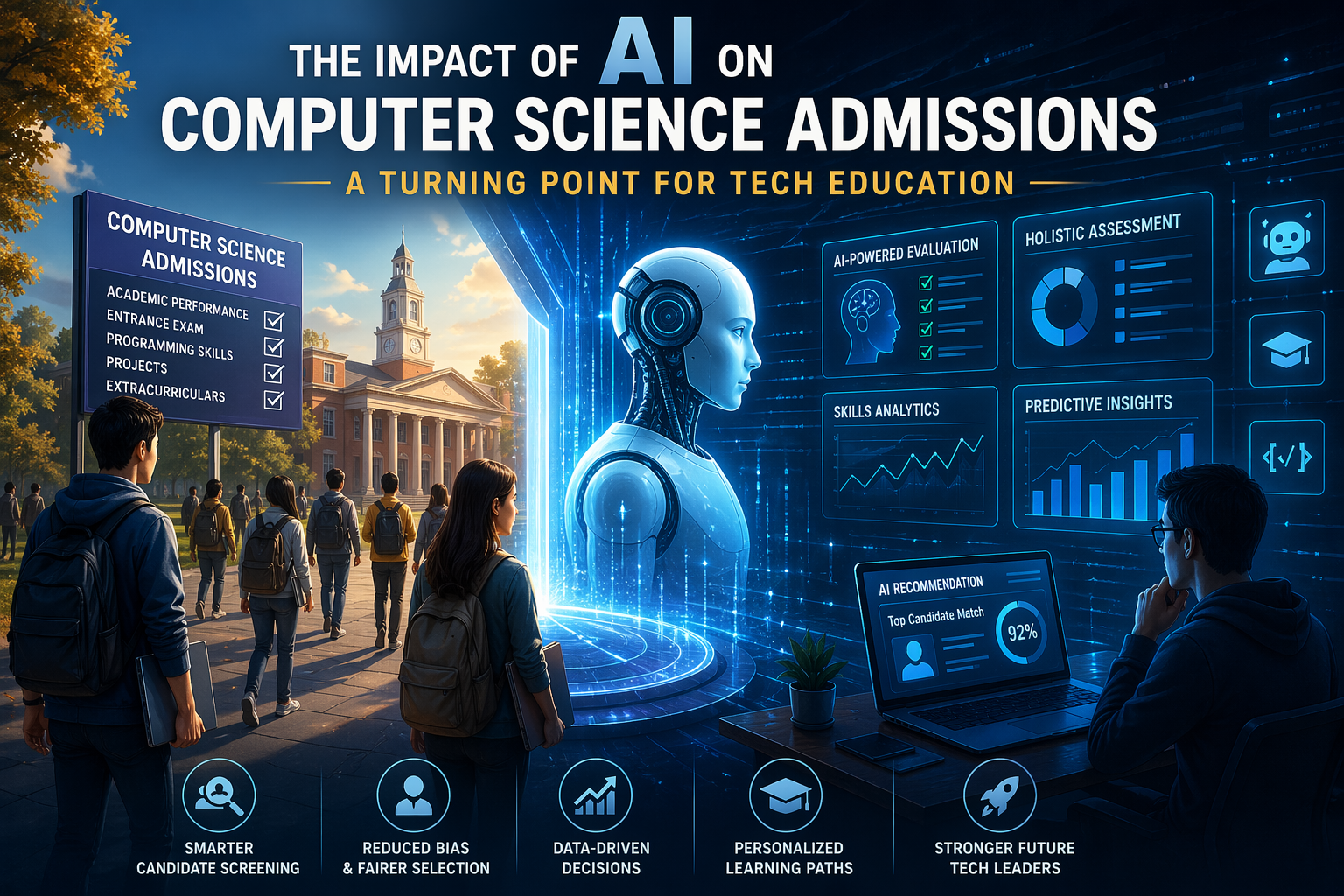
The rapid rise of artificial intelligence (AI) has begun to transform higher education in unexpected ways. For the first time since the dot-com bubble of the early 2000s, undergraduate computer science enrollment is declining at major university systems. However, it’s a complex story—not one of decline, but of transformation.
What the statistics say?
Across the University of California (UC) system, 12,652 students currently major in computer science—a 6% decline from 2024. This is the first consecutive decline in two decades.
| Institute | admission trend | Important Points |
|---|---|---|
| UC system | ↓ 6% (2025) | First decline since the dot-com era |
| Georgia State University | 3,640 (2024/25) → 3,147 (2025/26) | Decline from peak 3786 |
| CSUN | 323 (2024) → 173 (2025) | Sharp decline in new students |
But context is important: CS enrollment is still nearly double what it was a decade ago. The field isn’t collapsing—it’s recovering after a period of meteoric growth.
Why is this happening?
Impact of the AI Job Market
The biggest reason is changing perceptions about career prospects. As AI automates entry-level coding tasks, major tech companies have undertaken large-scale layoffs, citing AI-driven efficiency.
What students and parents are looking for
Entry-level software developer jobs are shrinking Microsoft reports that AI writes 30% of their new code Meta estimates that AI will handle half of their development work by 2026 The employment rate of junior developers (ages 22-25) has declined by 13%
David Renaldo (Founder of College Zoom) says
In years past, parents viewed a computer science degree as a clear path to a high-paying job. Now those parents are moving toward the hard physical sciences, such as mechanical or electrical engineering.
The exception that proves the rule
UC San Diego has bucked the downward trend—the only UC campus to launch a dedicated AI major. Over the past two years, 20% of applications to the Computer Science department have been for the AI program.
How universities are responding?
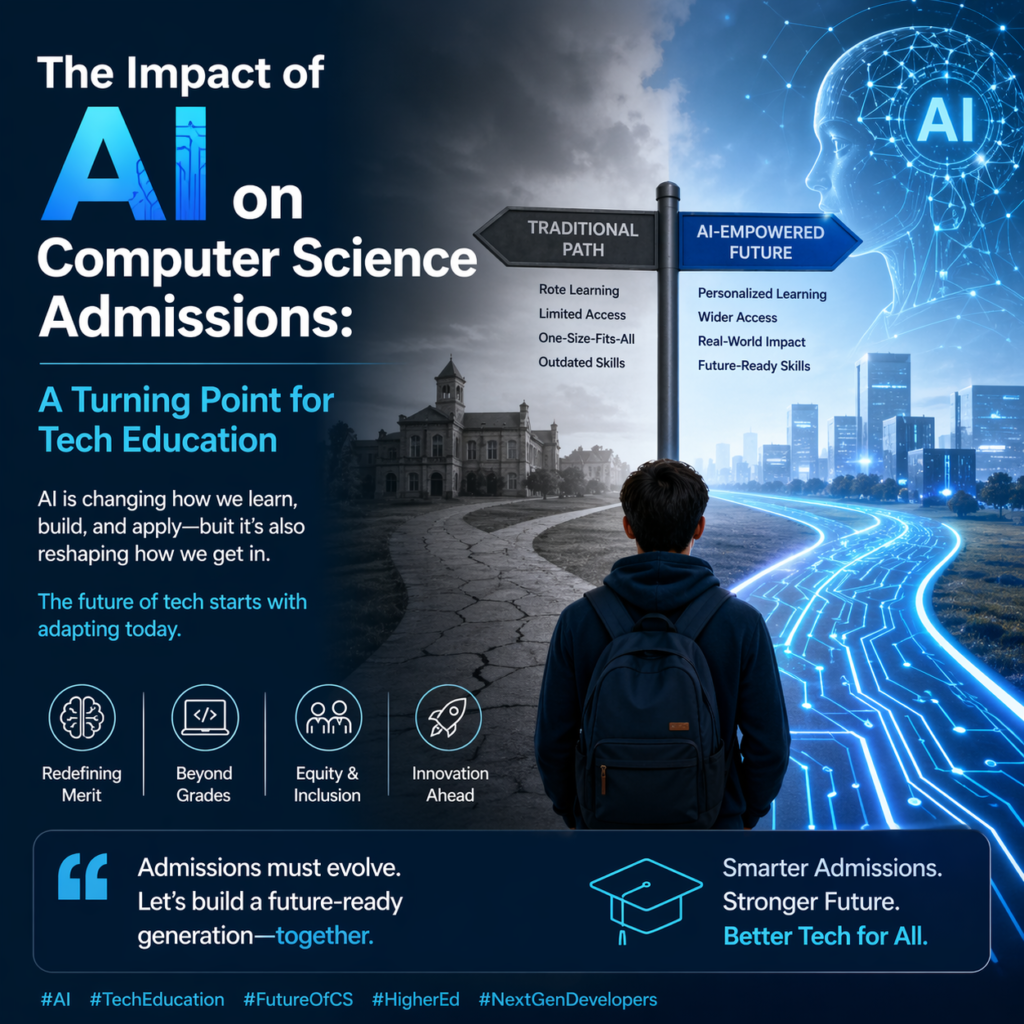
major curriculum changes
Instead of resisting AI, leading institutions are strategically embracing it
Columbia Engineering has radically redesigned its programming curriculum
Greater emphasis on reading and review (not just writing) Students learn to evaluate and improve AI-generated code Generative AI integrated as a learning tool from the first year
Stanford University has taken an even more revolutionary step. Its most popular new course, “The Modern Software Developer,” teaches students to program without writing manual code—students are required to use AI tools (like Cursor and Cloud).
Core vs. AI-specific debate
The Computing Research Association’s 2025 conference identified a key tension: should AI be integrated into all curricula, or should universities create separate AI degrees? The emerging consensus: both approaches are necessary. Students should
- Fundamental CS principles (computational thinking, algorithms, systems design) AI literacy and tool proficiency Ethical frameworks for responsible AI use
A global phenomenon
This trend is spreading beyond the United States. In South Korea, applications to computer science programs for the 2025 academic year declined significantly, reversing a period when the field held a prestige comparable to that of medicine. This decline is closely linked to AI-related recruitment concerns.
What this means for students?
A changing value proposition A computer science degree is still valuable—but not for the same reasons. What’s changing: Coding alone is no longer a guaranteed career path AI tools are becoming standard in the development workflow Entry-level positions are evolving, not disappearing
What remains essential: Computational thinking and problem-solving System architecture and design The ability to read, evaluate, and improve AI-generated code Adaptability as tools evolve
How to prepare yourself for success?
| Old approach | new approach |
|---|---|
| Focus on writing code from scratch | Learn how to effectively prompt, evaluate, and refine AI output |
| Master specific languages/frameworks | Develop strong architecture and problem-decomposition skills |
| Expect a linear corporate ladder | Be Portfolio Career and Entrepreneurship Ready |
| Ignore AI tools in the curriculum | Adopt them as productivity multipliers |
Short FAQs – AI Impact on CS Enrollment
Yes. But focus shifts from just coding to system design, problem-solving, and working with AI tools.
Job market anxiety, tech layoffs, AI automating entry-level coding, and students shifting to other engineering fields.
Not exactly. It’s changing jobs – routine coding gets automated, but humans are still needed for design, review, and architecture.
UC San Diego (AI major), Columbia Engineering (code review focus), Stanford (coding with AI tools).
System design, problem decomposition, AI prompting, code review, and ethics – not just syntax memorization.
Both. Get strong CS fundamentals + AI electives. Pure AI without systems knowledge is risky.
No. South Korea, India, and Europe are seeing similar trends – it’s global.
No, but they’ll evolve. Companies still need junior devs – just with different skills (AI tool fluency, code evaluation).